
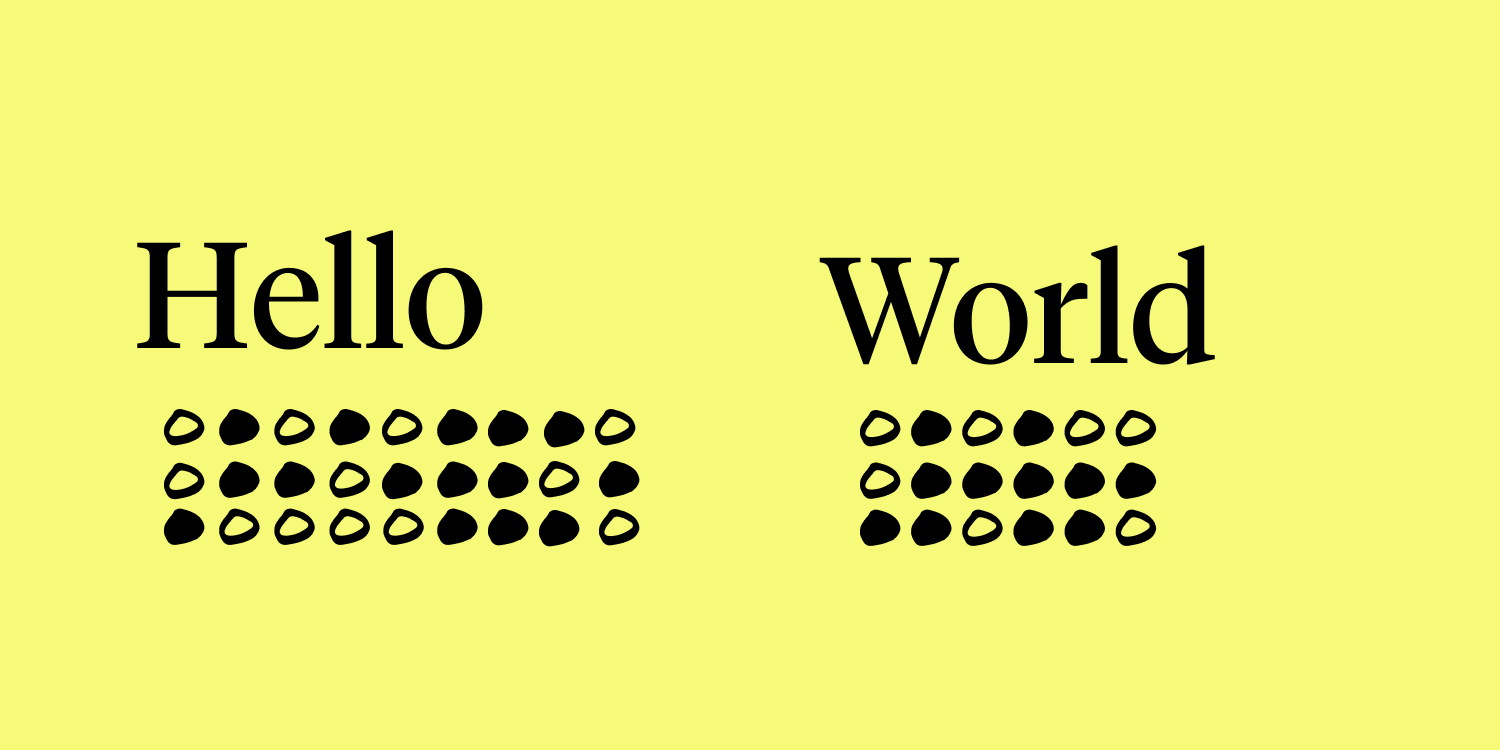
What changes when an app cannot assume sight or sound? Theo began with a simple answer: start with touch.
Start with the person, not the interface.
Deafblindness combines a loss of hearing and vision. It is not simply the sum of two diagnoses; it can change how a person communicates, moves, and makes sense of the world. The first article bundled with Theo starts there. Before we could design a feature, we had to design around a different set of assumptions.
That meant treating touch as a primary channel rather than a fallback. It also meant taking communication, mobility, and social connection seriously as one design problem—not as a collection of accessibility settings added at the end.
Theo starts with touch.
Theo was designed for deafblind people. It does not require sight or hearing; it relies on touch. Text is translated into Morse code and then into tactile feedback. Gestures provide input, haptic patterns provide response, and the device can return to Simple Chat with a shake once a caregiver has set it up.
This is a small but important shift in the mental model. The interface is not a screen with an accessibility layer. The interface is a language made from movement, rhythm, and feedback.
Writing a word, one gesture at a time.
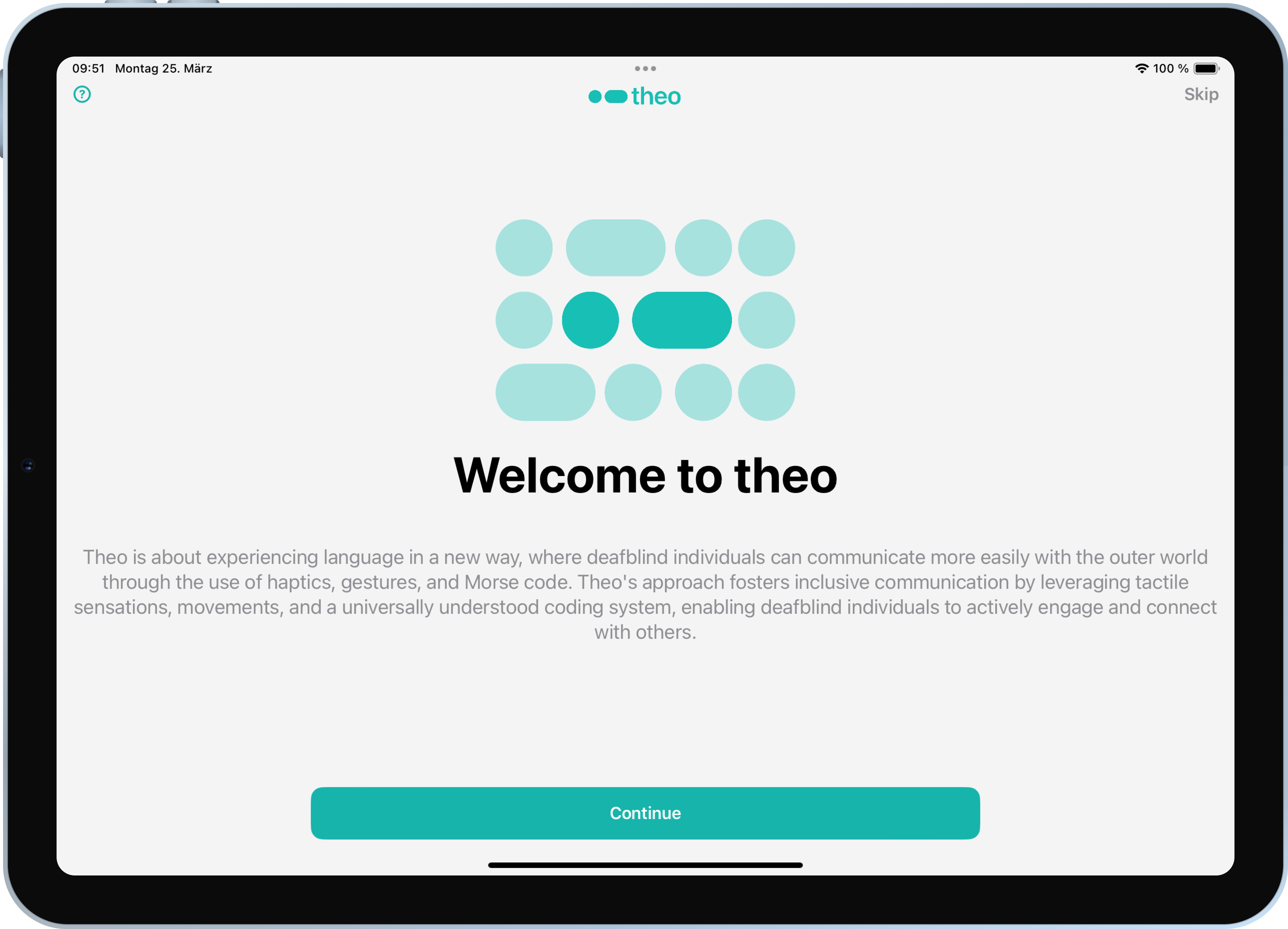
Theo's Morse canvas turns a familiar writing task into a sequence of deliberate gestures. A dot or a line produces immediate tactile feedback. The guide teaches people to use the canvas for input, then offers a speaker control or a pinch-out gesture to speak what was written aloud.
When the canvas feels too small, shaking the device or swiping up opens Simple Chat. The gesture is not a flourish; it is a way to move from a practice space into a conversation without needing to find a visual control.
The canvas keeps its grammar deliberately small: a single tap adds a dot, a right swipe adds a dash, a left swipe removes the last mark, a double tap starts a new character, and a long press starts a new word. The Morse model can then encode the pattern into a letter, number, or punctuation mark. Each rule is simple enough to remember and precise enough to become a rhythm.
The haptic engine gives that rhythm texture. Dots and dashes use different intensities and durations, while the speaker can provide a tone-based fallback on devices that cannot play the haptic pattern. Feedback is therefore part of the language itself, not a confirmation added after the interaction.
A chat you can feel.
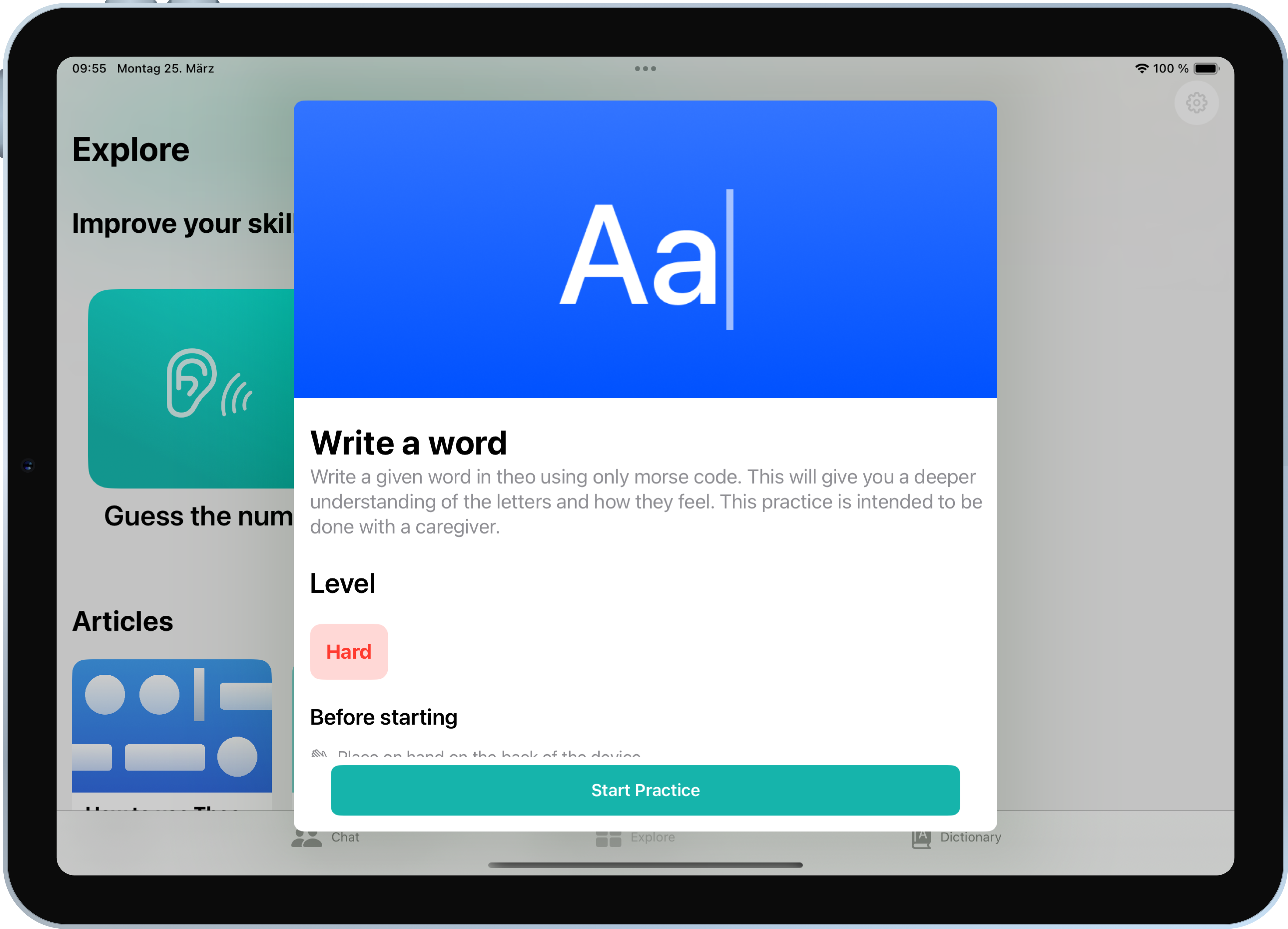
The Simple Chat view is meant to be felt rather than seen or heard. Tapping anywhere enters Morse code into the “You” field. Zooming changes the tactile relationship with the conversation partner's message, and swiping up starts transcription for the person in front of you. In the prototype, the view appears in a bright turquoise so it remains legible for people who have some remaining vision.
The result is not a replacement for every form of communication. It is a focused bridge: a way to bring text, speech, and touch into the same conversation.
The surrounding code makes that bridge wider. A camera action sends a captured image through Apple's text-recognition framework, while optional active listening watches for speech, whispering, or clapping before opening on-device transcription. These are not separate utilities; they are more ways for the same conversation to enter Theo.
Design for the room around the chat.
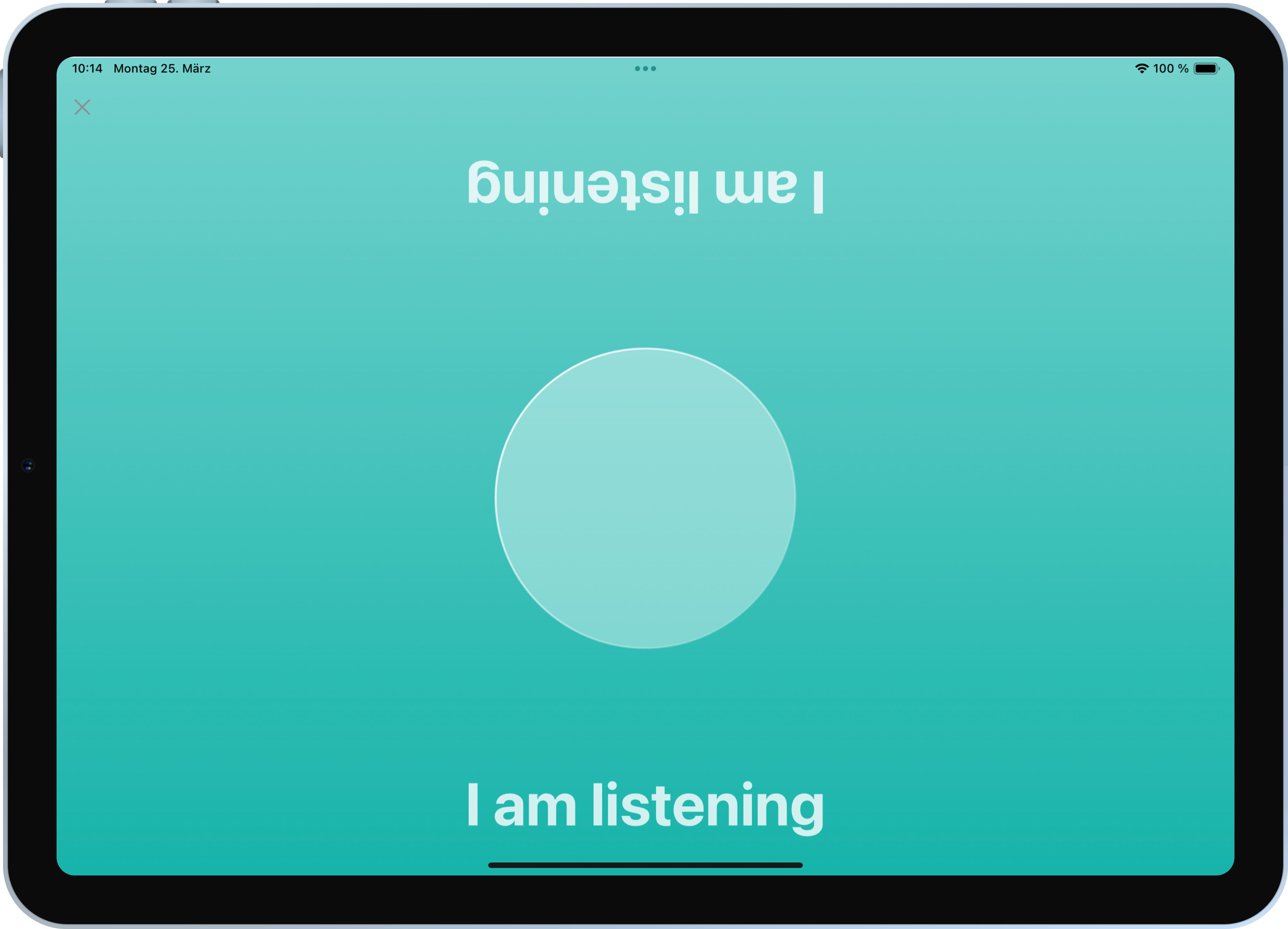
A conversation also depends on what happens outside the phone. Theo's optional active-listening flow watches for speech, whispering, or clapping, then hands the recognized audio to on-device transcription. It opens when the room gives it a reason, rather than making a microphone the main event of every interaction.
The camera follows the same principle from another direction. A captured image can pass through Apple's Vision text-recognition request and bring a sign, note, or screen into the conversation as text. The person using Theo gets more than one way to ask the world to become legible.
This is where inclusion becomes a systems question. The app is not only deciding how to render a message; it is deciding how a message can arrive, how much attention it asks for, and what should happen when sight or sound is not available.
Learning is part of the design.
The original guide is candid about the hard part: learning Theo can feel like learning a new language in a country you have never visited. That honesty matters. A tactile interface asks people to build a new skill set, and a beautiful first screen cannot remove that work.
That is why onboarding does not drop someone into an empty canvas. Welcome, Who Is Theo For?, the gesture explanation, the Morse canvas introduction, and the first Explore view build a sequence of context before asking for fluency. The app acknowledges that an accessible interaction still has to be taught.
Our responsibility is to make the rules consistent, the gestures teachable, and the feedback clear enough to support persistence. Theo is an early prototype, but the principle is durable: accessibility is not a final pass. It is the material the product is made from.
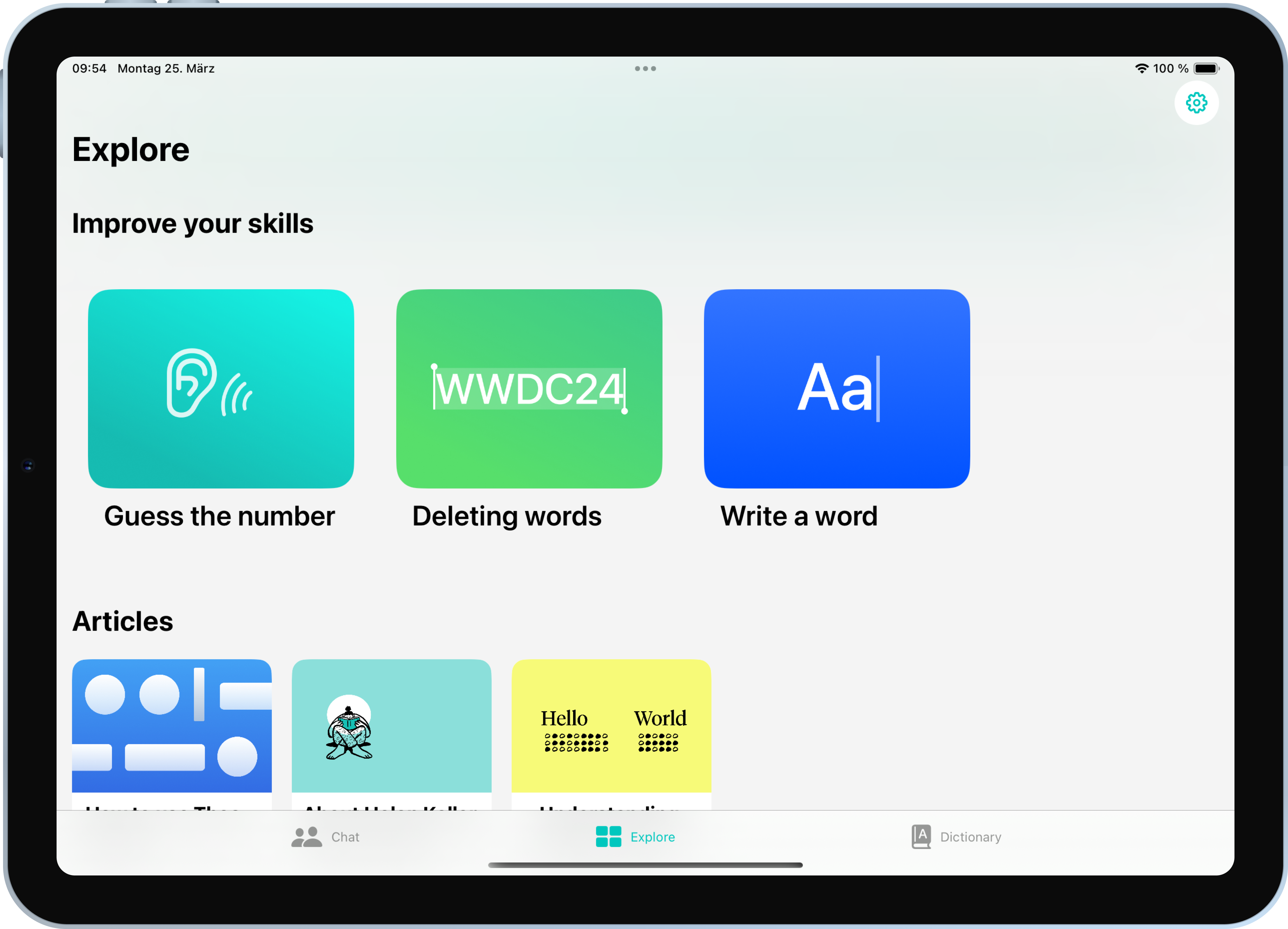
The Explore tab reflects that belief in its structure: practice exercises, articles, a gesture recap, and a small list of todos sit beside the main chat. The Morse dictionary and the onboarding walkthrough do not hide the system's rules; they teach them in place.
The result is a product that leaves room for repetition. A practice can be revisited, a gesture can be checked again, and an article can provide context when a rule stops making sense. The interface does not assume that learning happens once; it gives the learner somewhere to return to.
Make room for inclusion.
Designing Theo started with a specific community, but the lesson is wider. When we question the assumption that every user sees, hears, and navigates in the same way, we make better room for difference. The work is not only to ship an assistive feature; it is to build products that respect the ways people already make a life.
That is the work behind designing apps for the neurodivergent: start with attention, listen closely, and let the interface change shape around the person.
Sources
- World Federation of the Deafblind
- Theo prototype and in-app articles, WWDC 2024 submission